
Teachers are those whom we follow, consider as our gurus, and try to follow them to pave the way for us in life. Be it in school or other matters. Similarly, in the practice of yoga, teachers act as our yoga gurus.Now the question is, what is the role or responsibilities of a yoga instructor?
A yoga teacher or instructor must perform various responsibilities, including instilling a love for yoga in students, teaching them different postures, practicing breathing exercises, meditation, and reflection.
What Is a Yoga Teacher?
A yoga teacher is someone who has extensive expertise in all forms of yoga and who is trained to instruct others in yoga practices such as various asanas, breathing techniques (pranayama), mindfulness, and sometimes meditation.
But more vitally, an ideal yoga teacher creates a proper space for others to explore their body, breath, and mind.
What Does a Yoga Teacher Do?

Below is a discussion of what kind of responsibility you can expect from a yoga instructor:
Helps students build a foundation
The initial task that a Yoga instructor usually does is to teach basic yoga poses to the students and set a proper environmental tone for the class. means, they focus on creating a comfortable, inviting, warm, and clean environment in their yoga studio.
Lighting a candle on a corner altar increases the energy, imbuing the sense of sacredness to the place. Reading an opening poem or scriptural verse can also help set the internal focus and intention for the practice. This makes it much easier for students to adjust to the class.
Tailoring Training to Students’ Levels
Another important role and responsibility of a yoga teacher that an instructor should play is to design yoga sessions that match the skill level of the students. In this case, the description, modification, and demonstration should be accessible and understandable to all students.
for example, if the instructor has physical limitations, they usually give responsibility to the senior student to demonstrate proper asana alignment. Besides these, instructors also have the responsibility to demonstrate the correct pranayama or breathing asana techniques and beneficial meditation poses.
Modify students individually[responsibilities of a yoga instructor?]
A skilled and trained yoga teacher has a deep knowledge of anatomy and physiology, so they can teach students all yoga poses, even modifying poses. They also have a keen eye for proper alignment. With proper training, students are able to quickly and safely adjust their alignment if they have trouble with a pose.
They teach students how to practice yoga poses with or without props, how to safely relax the body while performing the poses, and more.
Promoting unity among students and helping them be inclusive
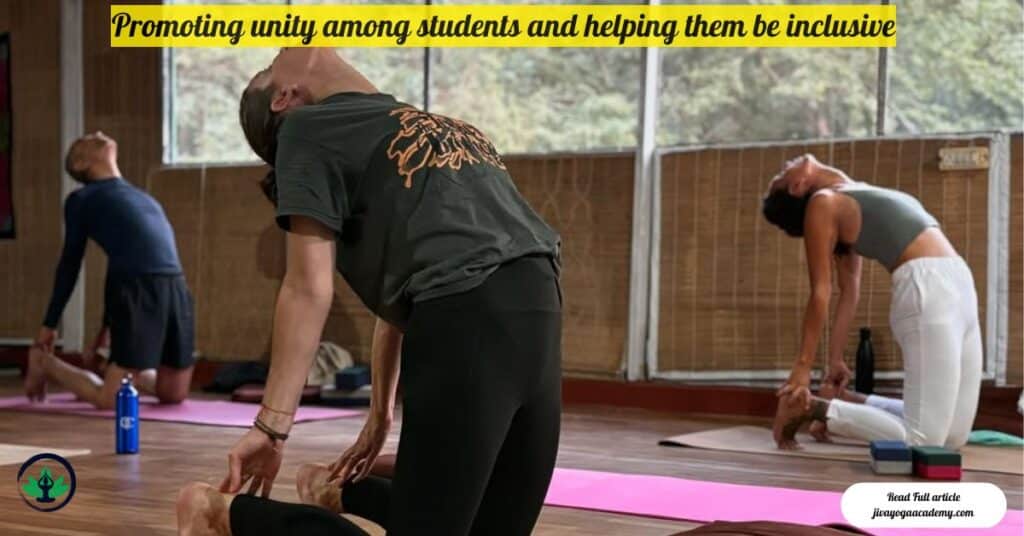
Yoga teachers who have received training from good schools are able to easily look inside their students and can easily identify biases. The more they interact with students, the more they will have the opportunity to observe their thoughts and feelings, thereby identifying and removing subconscious prejudices. This is another aspect of yoga.
The role of a knowledgeable and trained yoga teacher is to see the big picture and therefore promote inclusivity among students. If they can identify underlying biases, it is beneficial to prevent microaggressions to counter them.
Creating a Welcoming Environment to a yoga studio
It is one of the big responsibilities of a Yoga instructors to make all students feel comfortable, regardless of what they want or their body size or appearance. It is not right to over-focus on certain students. It can make them feel excluded from others.
Instead, they should offer all students all options for practice. Also, everyone should be treated with equal compassion. Let them know that you know their body and other obstacles best.
Supporting yoga and spreading its benefits to everyone
Outside the classroom, yoga instructor have responsibilities. They can make yoga accessible to a wide range of audiences. They can support organizations, or they can promote the benefits of yoga in a non-partisan way. They can spread the benefits of yoga to everyone through donations, social media outreach, volunteering, and teaching.
Leading all students equally with loving-kindness
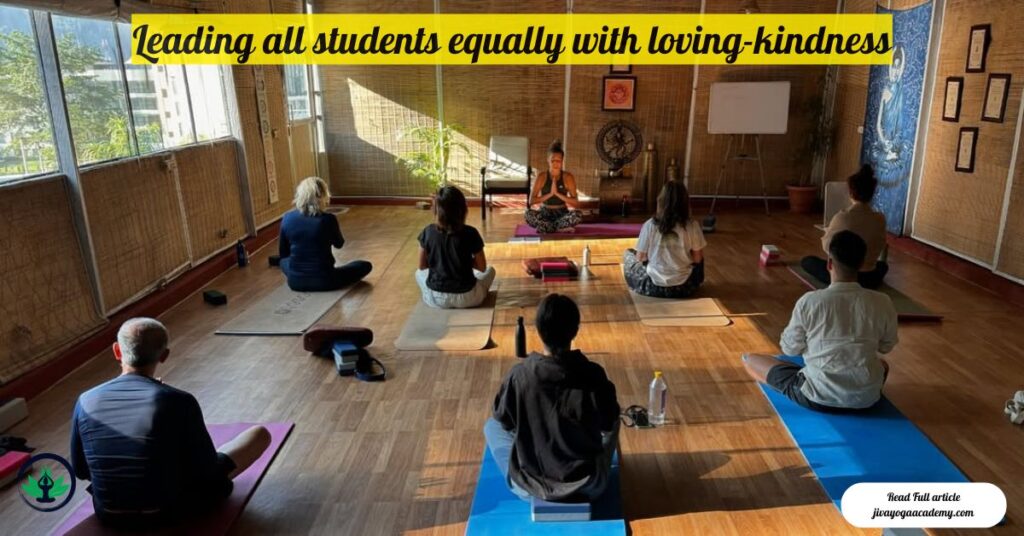
A yoga teacher should always be open to all people and show love. They should eliminate bias within themselves. By overcoming all negativity, treating everyone equally, and behaving in a way that makes yoga a welcoming practice for almost all types of people. This inclusion can help many people feel welcome in the world.
Recognising Different Learning Styles
Yoga teachers must understand that students do not learn in the same way; they learn in different ways, such as auditory, visual, and kinesthetic. A trained yoga teacher can tailor instruction to accommodate learning styles, which greatly increases the effectiveness of yoga practice.
It is also important to observe how students respond to different methods, which will make it easier for teachers to meet individual needs.
Adapting all types of teaching Methods
Instructors often need to provide small classes or private lessons. In these types of classes, they need to identify individual learning styles. In larger or more dynamic classes, it is important to ensure a balance of auditory, visual, and dynamic instruction so that nearly all students receive the instruction they need. Try to get to know your students’ preferred learning styles, which will enhance your teaching process.
Be Communicative
The yoga instructor needs to have good communication skills as they speak a lot. Besides this, they should use such types of words that are clear, confident, and easy to follow. He/She should also listen well. Good communication helps in becoming a good yoga teacher.
Adaptability
Every class is not the same. If one day you have to teach a room full of beginners, the next day, there are a bunch of experienced yogis in front of you. The yoga teacher should be able to adjust their teaching according to classes. It is also an important role and responsibility of a yoga teacher.
Respect for Yoga’s Roots
You cannot say yoga is just a workout—it’s a process that makes a bridge between cultural and spiritual practice, which develops the mind along with the body. A good yoga guru always honors that, so they try to stay informed and also avoid cultural appropriation.
Conclusion
The primary role and responsibilities of a Yoga instructor is to create a safe, peaceful, and supportive environment for students. Additionally, the teacher usually demonstrates and guides students through practicing the different yoga poses safely and perfectly. Then this procedure can be more enjoyable