Choosing a yoga teacher training course is about more than finding the right price or the shortest program. You will be spending several weeks practising, studying, and learning how to teach, so the style of yoga, course structure, teachers, location, and overall environment all matter.
Thailand is a popular destination for this kind of training, and there is quite a bit of variety. You can train at a beachfront shala in Phuket, stay at a residential yoga centre in Koh Samui, or spend a month in Koh Phangan, where yoga and wellness are a big part of the island’s community.
The five schools below take different approaches to 200-hour training. Some have a strong Ashtanga or Vinyasa focus, while others put more emphasis on traditional yoga, Yin, meditation, or personal development. Looking at those differences can help you work out which type of training suits you.
Why Train to Become a Yoga Teacher in Thailand?
Thailand gives students the opportunity to step away from their normal routine and spend several weeks focused on yoga.
Most 200-hour teacher training programs cover the core areas you would expect, including asana, anatomy, pranayama, meditation, yoga philosophy, sequencing, and teaching methodology. The balance between these subjects, however, can vary quite a lot from one school to another.
The location can also shape the experience.
Phuket offers a tropical island setting with easy access to beaches and everyday amenities. Koh Samui has several established yoga resorts and residential training centres. Koh Phangan is particularly well known for its yoga and wellness community and has a range of training programs to choose from.
For some students, the surroundings are almost as important as the curriculum. Spending a month somewhere that feels comfortable and inspiring can make a big difference when you are studying and practising every day.
1. All Yoga Training – Phuket
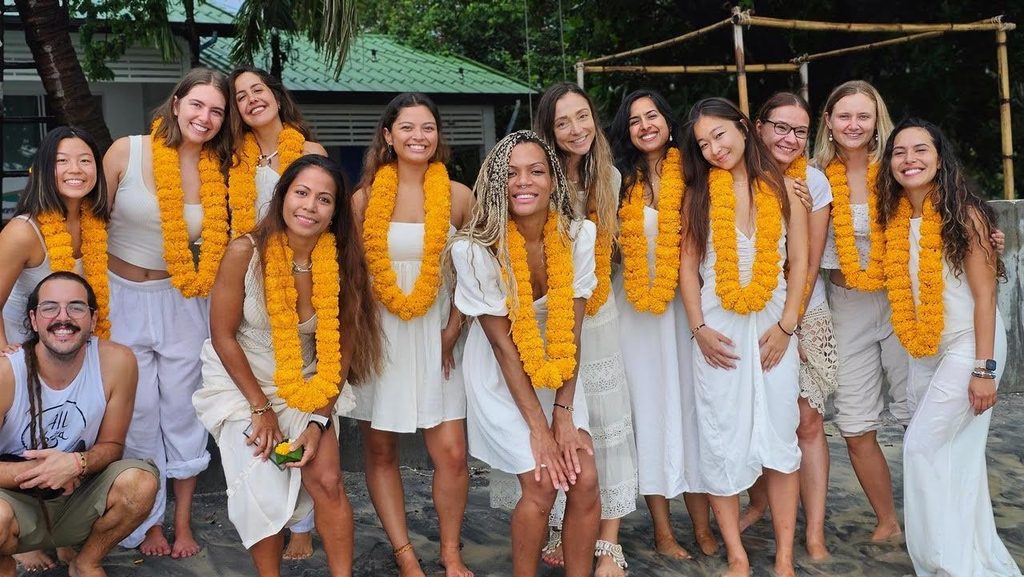
All Yoga Training has been running yoga teacher training programs since 2009 and offers a 200-hour course in Phuket.
The Thailand program has a strong Ashtanga Vinyasa foundation, but students are also introduced to Rocket Yoga, Vinyasa, and Yin Yoga. The 23-day training covers the usual foundations of a 200-hour course, including pranayama, meditation, anatomy, yoga philosophy, alignment, sequencing, and teaching methodology.
There is also a practical side to the training. Students work on things such as cueing, sequencing, demonstrations, adjustments, and leading classes rather than spending the entire course in lectures and personal practice.
The training takes place at a beachfront shala, which gives students a dedicated place to practise while still being close to the wider Phuket area. The school says it has trained more than 3,500 graduates since 2009, and the Thailand course currently limits the group to 18 students.
Location: Phuket, Thailand
Main styles: Ashtanga Vinyasa, Rocket Yoga, Vinyasa, Yin Yoga
Duration: 23 days
Price: From $2,650
Group size: Maximum 18 students
2. Vikasa Yoga – Koh Samui
Vikasa Yoga takes a residential approach to its 200-hour teacher training on Koh Samui. The program runs for 21 days and is built around the Vikasa Method, with Hatha Yoga, Vinyasa, and pranayama also forming part of the training.
One of the advantages of a residential course is that students can stay close to the practice environment throughout the program. Vikasa’s Koh Samui campus has dedicated yoga spaces and resort facilities, and accommodation and meals can be included depending on the package selected.
The 21-day format is also relatively compact compared with the four-week programs offered by several schools in Thailand. That may suit students who want an intensive training experience without committing to a full month.
The current 2026 intake listed by the school runs from September 27 to October 18, with further dates available for 2027.
Location: Koh Samui, Thailand
Main styles: Vikasa Method, Hatha Yoga, Vinyasa, Pranayama
Duration: 21 days
Price: From $3,980
Course dates: September 27–October 18, 2026, with additional 2027 intakes
3. One Yoga – Koh Phangan
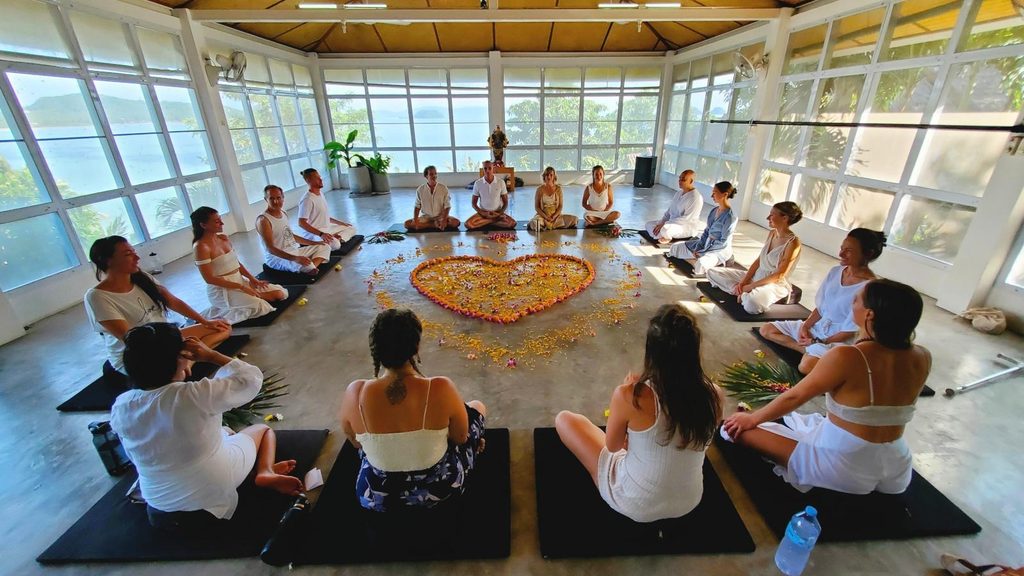
One Yoga offers a 28-day 200-hour teacher training on Koh Phangan. Its curriculum gives students exposure to several different styles, including Hatha, Vinyasa, Yin, and Restorative Yoga.
The course is designed to accommodate students with different levels of previous yoga experience and covers the main areas expected in a 200-hour training. Students can also take part in an optional teaching practicum if they want additional experience teaching after completing the core course.
The training takes place in a private-beach setting, which gives it a distinctly tropical feel. Regular 2026 intakes make it an option for students who want some flexibility when planning their trip.
Accommodation is not part of the basic tuition, although options are available separately. This is worth including in your budget when comparing the total cost with residential programs.
Location: Koh Phangan, Thailand
Main styles: Hatha, Vinyasa, Yin, Restorative Yoga
Duration: 28 days
Price: From $2,099 early bird
Group size: Maximum 26 students
4. Orion Healing Center – Koh Phangan
Orion Healing Center approaches teacher training from a wider wellness perspective. Its 28-day 200-hour program takes place at the centre in Koh Phangan and combines yoga training with the broader wellness environment for which Orion is known.
The physical practice is led primarily through Vinyasa, with Hatha and Yin Yoga also included. Students work through areas such as sequencing and practical teaching alongside their regular yoga practice.
The setting is one of the main differences between Orion and a school that focuses exclusively on teacher training. Students are surrounded by other wellness activities and can experience yoga as part of a broader approach to health and wellbeing.
Breakfast and lunch are included on course days. Accommodation is separate, with options available at the centre.
Location: Koh Phangan, Thailand
Main styles: Vinyasa, Hatha, Yin Yoga
Duration: 28 days
Price: From €1,900 early bird
Group size: 15–20 students
5. Samma Karuna – Koh Phangan
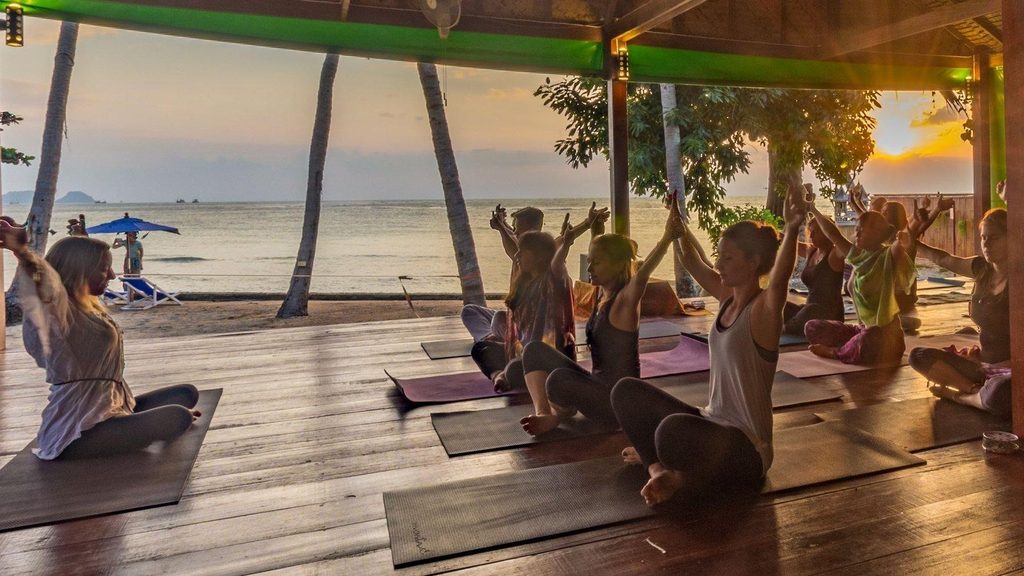
Samma Karuna takes a broader approach to yoga teacher training, with personal development and meditation playing an important role alongside the physical practice.
The 28-day program covers Hatha, Vinyasa, and Yin Yoga, while also giving students time to explore meditation and personal development. There is also an optional month-long internship for students who want to continue their practical experience after completing the main training.
Accommodation is part of the current base package, with dormitory accommodation included and private options available for an additional cost. The November 2026 course is scheduled to run from November 22 to December 20.
This type of program may appeal to students who see teacher training as more than preparation for teaching classes. The personal side of the experience is given a significant amount of attention alongside the technical aspects of becoming a yoga teacher.
Location: Koh Phangan, Thailand
Main styles: Hatha, Vinyasa, Yin Yoga
Duration: 28 days
Price: From €2,540 early bird
Course dates: November 22–December 20, 2026
Thailand and Other Yoga Teacher Training Destinations
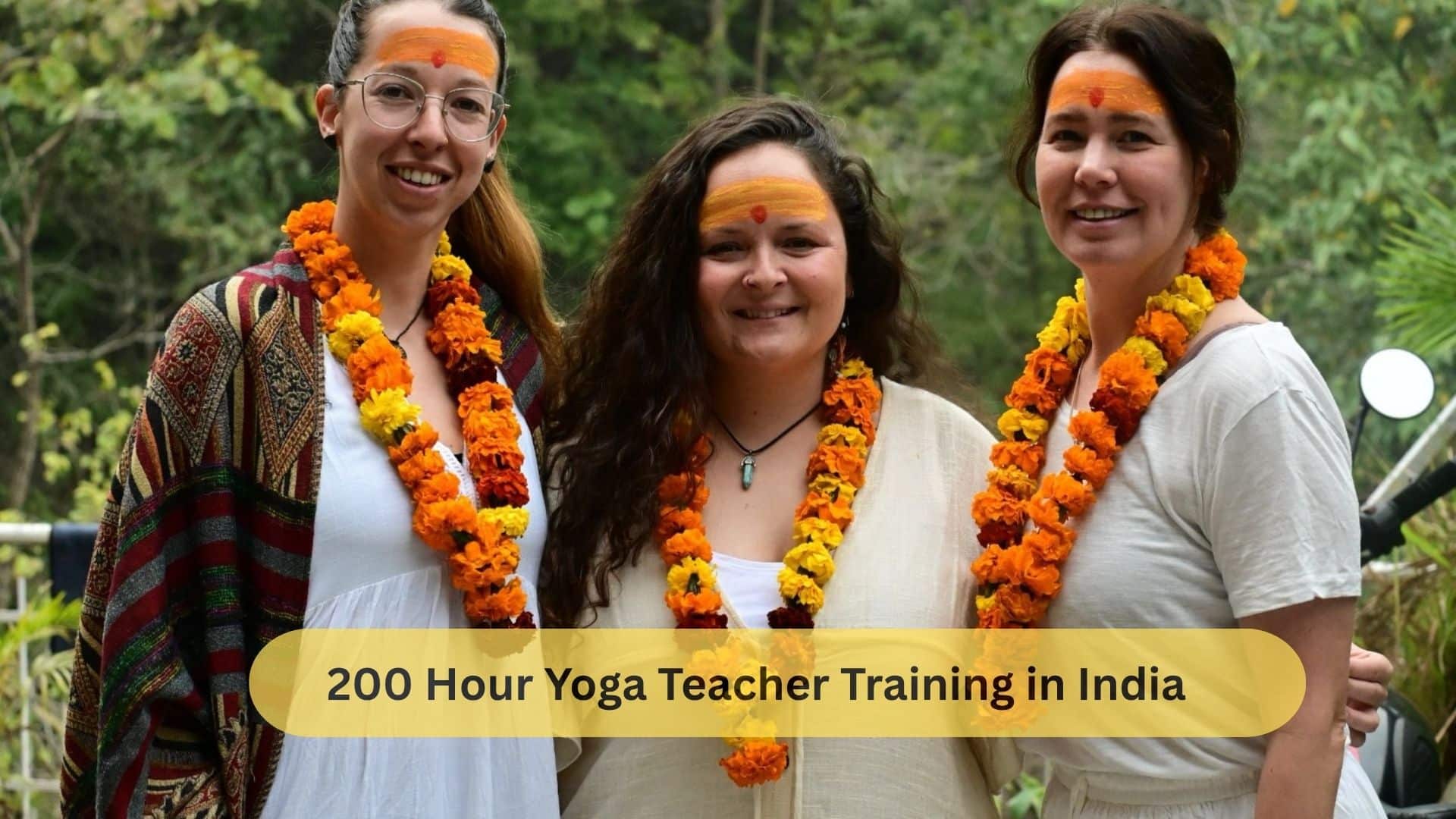
Thailand is not the only destination students consider when looking for an international yoga teacher training. India, and particularly Rishikesh, is another established destination for students who want to study yoga.
The two experiences can be quite different.
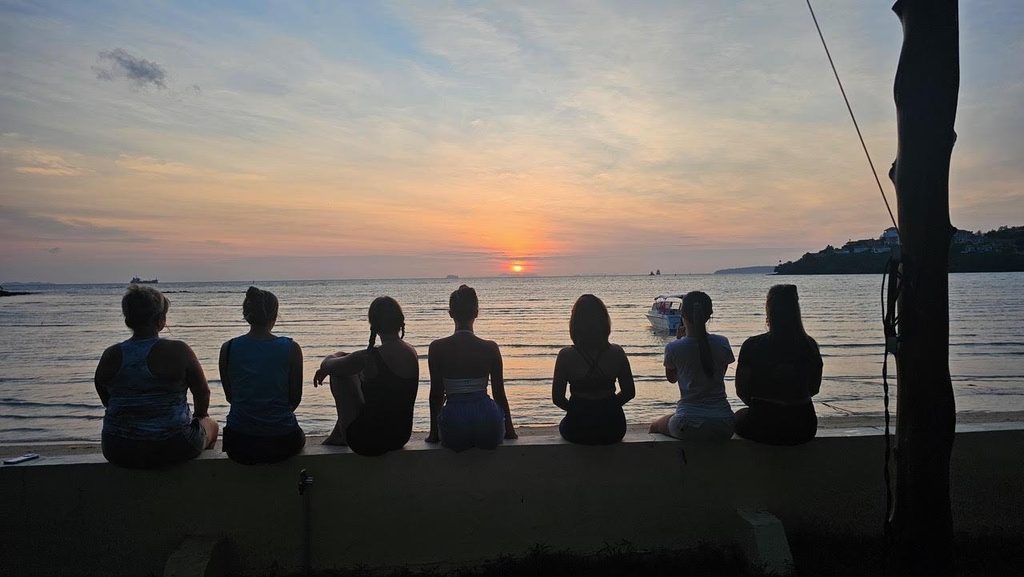
Thailand programs often combine teacher training with a tropical or retreat-style setting. Depending on the school, students may spend their training near a beach, stay at a residential resort, or become part of a wider wellness community.
Rishikesh has a different appeal. The city has a long association with yoga and is home to many yoga schools and teacher-training centres. Programs vary, but students looking at India may find courses with a stronger emphasis on traditional practices such as Hatha Yoga, pranayama, meditation, yoga philosophy, and related areas of study. This is also the type of curriculum Jiva Yoga Academy highlights in its own Rishikesh programs.
That does not mean every school in either destination follows the same approach. Curriculum and teaching style can vary significantly between programs, so it is worth looking beyond the destination itself.
If you are deciding between Thailand and India, consider what you want from the experience. A tropical residential setting may be important to one student, while another may prefer to study in a place with a deeper connection to traditional yoga education.
What to Look for in a Yoga Teacher Training
Once you start comparing courses, it is easy to focus on the advertised price and number of training days. Those are useful starting points, but they do not tell you everything.
Teaching style
Start with the styles you are interested in practising and eventually teaching.
Some programs have a strong Ashtanga foundation, while others lean toward Hatha, Vinyasa, Yin, or a combination of styles. If you already know which traditions you enjoy, this can help narrow down your options.
Teaching practice
A good teacher training should give you opportunities to practise teaching, not just study theory.
Look at how the course handles sequencing, cueing, adjustments, demonstrations, class planning, and feedback. These practical skills can make a significant difference when you begin teaching your own classes.
Location
Think about what kind of environment will help you stay focused for several weeks.
Phuket, Koh Samui, and Koh Phangan all offer very different experiences. Some students may prefer a quiet residential setting, while others may enjoy having beaches, restaurants, and other activities nearby.
What is included
Do not compare tuition prices without checking what comes with them.
Accommodation, meals, airport transfers, course materials, and other extras can change the actual cost of a training considerably. A cheaper course may not necessarily be cheaper once these expenses are added.
Teachers and curriculum
Take some time to look at who will actually be teaching the course and what is included in the curriculum.
Class size, anatomy, philosophy, meditation, teaching methodology, practical teaching, and the amount of daily practice can all affect the experience. It is worth looking at the detailed schedule rather than relying only on the course title.
Final Thoughts
There are plenty of ways to complete a yoga teacher training in Thailand, and the best fit will depend on what you want from the experience.
The schools above cover a fairly wide range, from the Ashtanga-based approach of All Yoga Training in Phuket to the residential environment of Vikasa in Koh Samui and the broader wellness and personal-development approaches found among the Koh Phangan programs.
Thailand can be a good option for students who want to combine intensive yoga study with a tropical environment. At the same time, students considering international teacher training may also want to compare Thailand with established yoga destinations such as Rishikesh in India.
Rather than choosing based only on the headline price or the number of days, look at the full picture: the styles taught, practical teaching experience, teachers, curriculum, accommodation, group size, location, and total cost. Those details will give you a much better idea of what the training will actually be like.