Choosing a yoga teacher training in Bali is about more than comparing course prices and the number of training days. You will be spending several weeks practising, studying, and learning how to teach, so the style of yoga, curriculum, teachers, and location all deserve some attention.
Bali has a wide range of teacher training programs. Some schools focus heavily on Ashtanga and Vinyasa, while others take a more traditional Hatha approach or place greater emphasis on anatomy, meditation, philosophy, or holistic wellness.
The location can make a difference too. Nusa Lembongan offers a quieter island environment, Sanur has a relaxed beachfront atmosphere, Kedungu provides a more laid-back coastal setting near Canggu, and Ubud is known for its yoga, wellness, and cultural scene.
The five schools below take different approaches to 200-hour training. Rather than ranking them, this guide looks at what makes each program different so you can decide which type of training suits you.
Why Train to Become a Yoga Teacher in Bali?
Bali has become a popular destination for yoga teacher training because students can spend several weeks immersed in their practice while living in an environment where yoga and wellness are already a major part of everyday life.
A typical 200-hour training covers subjects such as asana, anatomy, pranayama, meditation, yoga philosophy, sequencing, teaching methodology, and practical teaching. The balance between these areas can vary considerably between schools.
Some programs put most of their attention on physical practice and teaching methodology. Others give more time to meditation, philosophy, anatomy, or personal development.
The location is another part of the experience. A beachfront program in Nusa Lembongan will feel very different from a residential retreat in Ubud, even if both offer a 200-hour certification.
For many students, finding the right environment is just as important as finding the right curriculum.
1. All Yoga Training – Nusa Lembongan
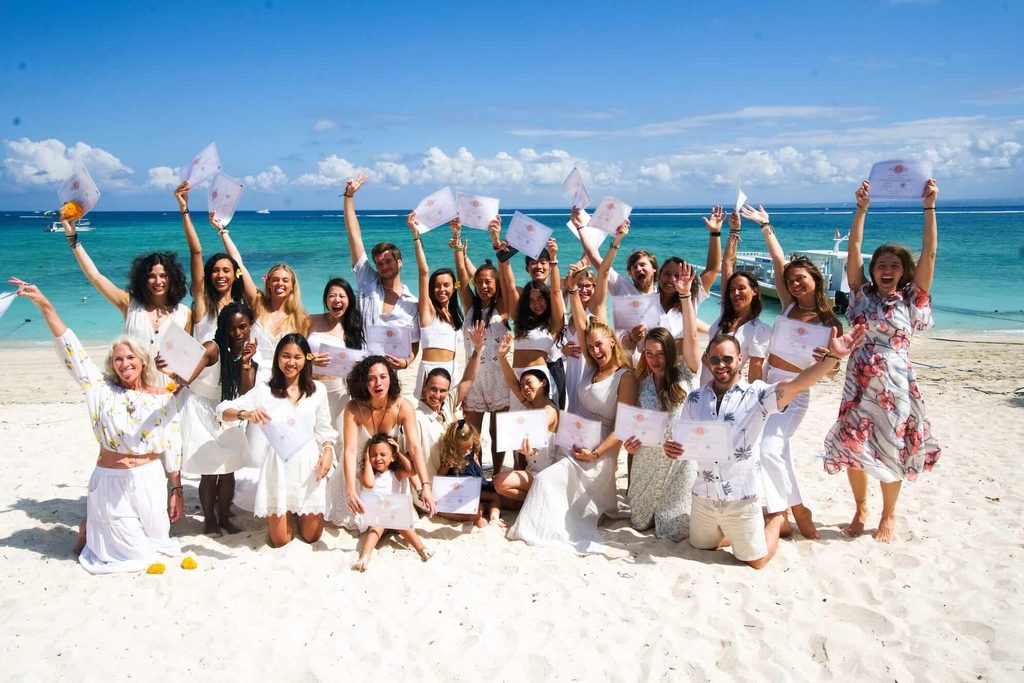
All Yoga Training has been running yoga teacher training programs since 2009 and offers its 200-hour Bali program on the island of Nusa Lembongan.
The course has a strong Ashtanga Vinyasa foundation, with Rocket Yoga and the Modified Primary Series also playing an important role. Students are introduced to Vinyasa and Yin Yoga as well as Mysore-style practice.
The 23-day training covers the broader foundations of teacher education too, including pranayama, meditation, anatomy, yoga philosophy, alignment, sequencing, and teaching methodology.
There is a strong practical element to the course. Students work on cueing, sequencing, adjustments, class design, demonstrations, and leading classes rather than simply observing instructors.
The training takes place at a beachfront shala in Nusa Lembongan. The school says it has trained more than 3,500 graduates since 2009, with the Bali course currently limited to a maximum of 24 students.
Location: Nusa Lembongan
Main styles: Ashtanga Vinyasa, Rocket Yoga, Vinyasa
Duration: 23 days
Price: From $3,150 early bird
Group size: Maximum 24 students
2. Power of Now Oasis – Sanur
Power of Now Oasis has been operating in Sanur since 2010 and offers yoga teacher training in a beachfront environment.
The school’s approach centres on Hatha and Vinyasa while also incorporating broader areas of yoga education and holistic practice. Its training runs for around 27 days, with groups kept relatively small at around 20 students.
Students can arrange accommodation at the nearby Kolonial House at a student rate. The school also has a community-oriented side through its local and charitable initiatives.
Sanur offers a quieter coastal atmosphere than some of the busier parts of southern Bali. For students who want to spend their training close to the beach without being completely removed from everyday life, the location may be part of the appeal.
Location: Sanur
Main styles: Hatha and Vinyasa
Duration: 27 days
Price: From $2,600 early bird
Group size: Maximum 20 students
3. Loka Yoga School – Kedungu
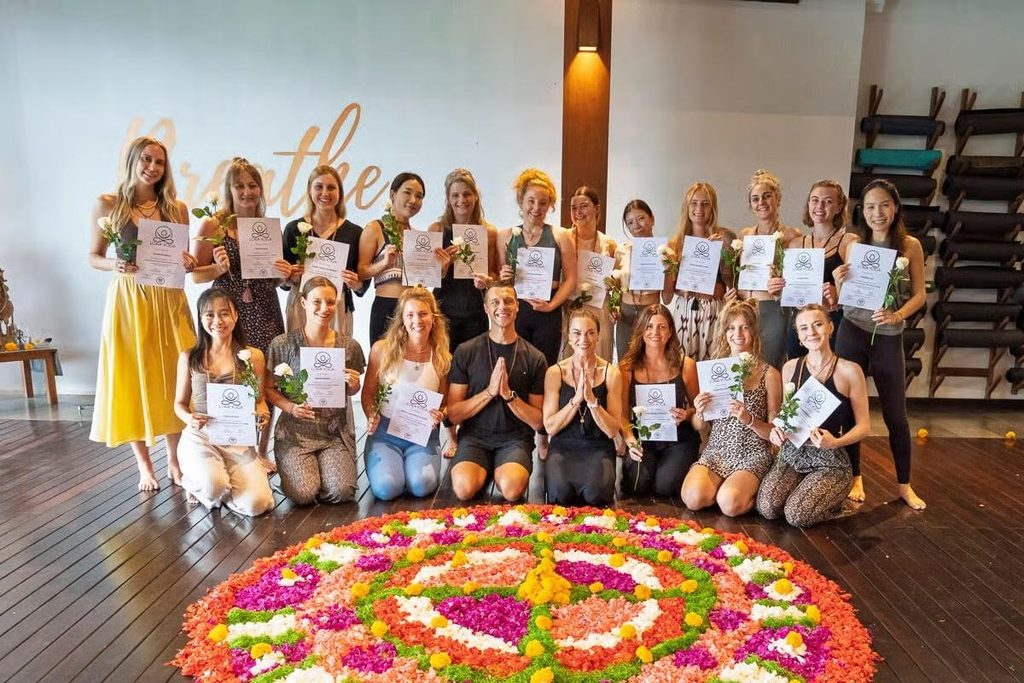
Loka Yoga School takes a multi-style approach, combining Hatha, Vinyasa, Power, and Yin Yoga in its teacher training.
One of the more distinctive parts of the program is its focus on anatomy and movement. Anatomy modules are taught by medical professionals, giving students an opportunity to look at yoga practice from a more science-based perspective.
The course also provides access to an online student portal with additional learning materials, which can be useful for students who want resources to refer back to during and after the training.
The 28-day program is based in Kedungu, a coastal area north of Canggu. The setting combines access to the beach with a quieter environment and surrounding rice fields. Accommodation can be arranged separately for students who want to stay close to the training.
For practitioners interested in understanding not only how yoga looks but also how the body moves, the anatomy component is one of the main features worth exploring.
Location: Kedungu, near Canggu
Main styles: Hatha, Vinyasa, Power, Yin
Duration: 28 days
Price: From $2,700; $3,500 with private accommodation
Key focus: Anatomy, movement, and multi-style training
4. East+West Yoga – Ubud
East+West Yoga combines traditional Indian Hatha with modern Vinyasa and a physiotherapy-based approach to alignment.
The training runs for approximately three weeks and is held at resort locations around Ubud or Canggu. The teaching team includes Indian yoga instructors alongside Western trainers, bringing different perspectives to the course.
Accommodation is included, making this a residential option for students who prefer to stay within the training environment throughout the program.
The curriculum combines traditional yoga practices with modern approaches to movement and alignment. This may appeal to students who want a foundation in Hatha while also developing their understanding of anatomy and physical alignment.
Location: Ubud
Main styles: Traditional Hatha, Vinyasa, physiotherapy-based alignment
Duration: Approximately 21–23 days
Price: From $4,100
Key focus: Traditional practice, modern alignment, and residential training
5. Yoga New Vision – Ubud
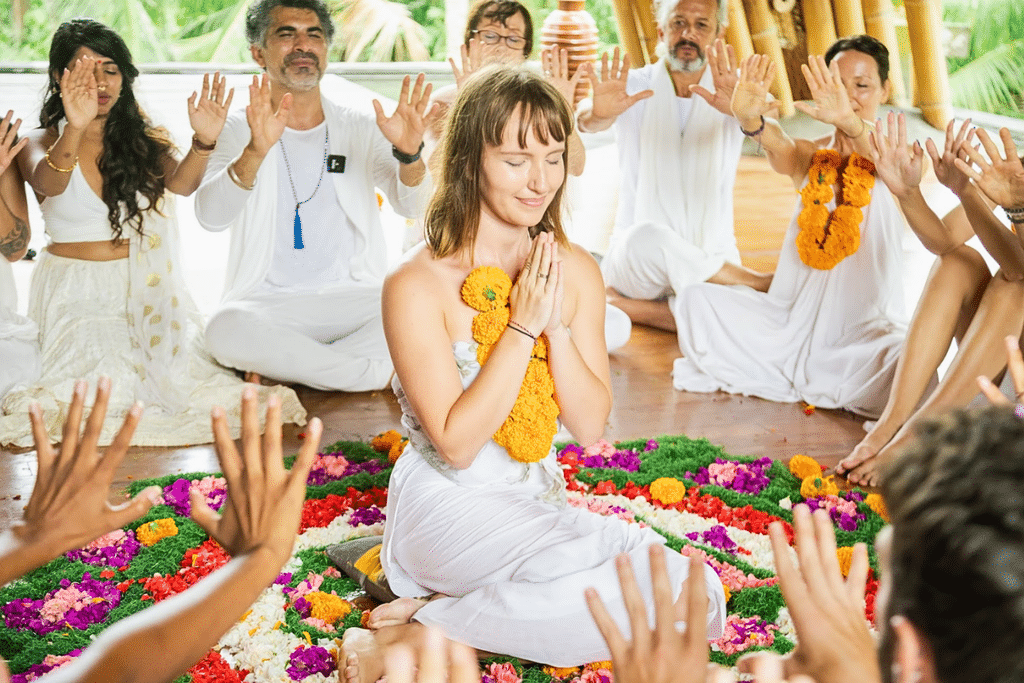
Yoga New Vision takes a more traditional and meditative approach to teacher training in Ubud.
Its program centres on Meditative Hatha Vinyasa and incorporates traditional Indian yoga philosophy and meditation practices. Rather than focusing primarily on physically demanding sequences, the course gives significant attention to the mental and philosophical aspects of yoga.
The training runs for approximately three weeks at Om Ham Retreat & Resort in Ubud, with accommodation included in the program.
The teaching team includes Indian and Western instructors, and the curriculum brings together traditional yoga philosophy with modern scientific perspectives.
For students who are particularly interested in meditation, philosophy, and the internal side of yoga practice, this provides a different experience from programs that place most of their emphasis on physical practice.
Location: Ubud
Main style: Meditative Hatha Vinyasa
Duration: Approximately 21–22 days
Price: From $1,999, depending on package
Key focus: Meditation, traditional philosophy, and Hatha Vinyasa
Bali and Other Yoga Teacher Training Destinations
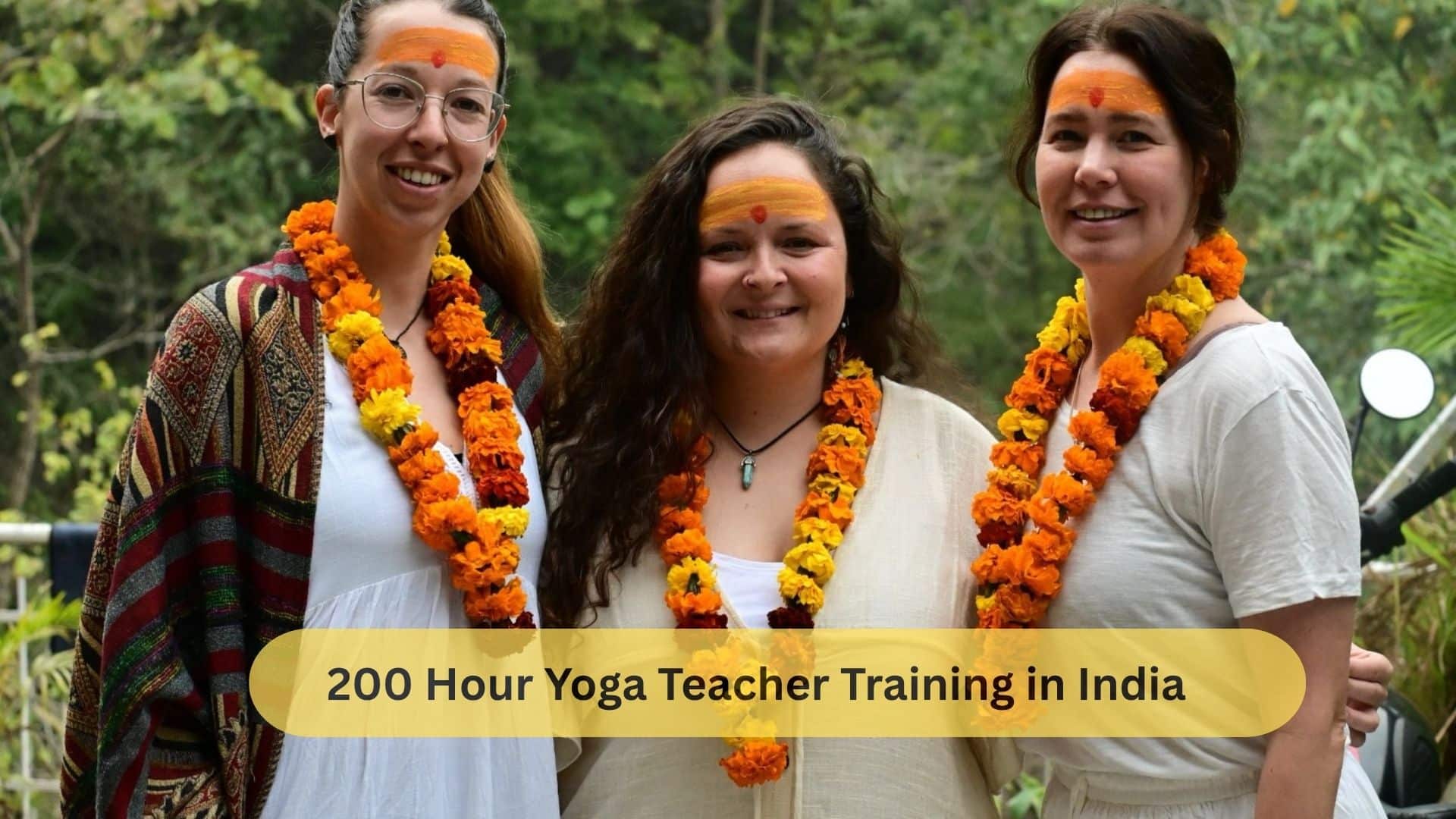
Bali is one of several destinations that students consider when looking for an international yoga teacher training. India, particularly Rishikesh, is another well-known destination for people interested in studying yoga.
The experience can be quite different depending on where you choose to train.
Bali programs often combine teacher education with a tropical setting and a strong wellness culture. Students can train near the beach, stay at a retreat centre, or spend several weeks in one of the island’s established yoga communities.
Rishikesh offers a different kind of environment. The city has a long association with yoga and is home to numerous yoga schools and teacher-training centres. Programs vary, but students looking at India may find courses with a stronger focus on traditional practices such as Hatha Yoga, pranayama, meditation, yoga philosophy, and related areas of study.
That does not mean Bali programs are less traditional, nor does every Indian program follow the same approach. Each school has its own curriculum, teaching team, and philosophy.
The important question is what you want from the training. If you are looking for a tropical retreat environment, Bali offers a wide range of options. If studying yoga in a place closely associated with traditional yoga education appeals to you, Rishikesh may also be worth considering.
What to Look for in a Yoga Teacher Training
Once you begin comparing courses, it is easy to focus on the advertised price or the number of training days. Those details are useful, but they only tell part of the story.
Teaching style
Think about the kind of yoga you already enjoy and what you would like to teach after graduation.
Some programs have a strong Ashtanga foundation, while others focus on Hatha, Vinyasa, Yin, meditation, or a combination of styles. Looking at the actual curriculum can help you work out whether the course matches your interests.
Teaching practice
Teacher training should involve more than practising yoga and listening to lectures.
Look at how much time students spend working on sequencing, cueing, adjustments, demonstrations, class planning, and teaching. Feedback from instructors can also be valuable when you are developing confidence as a new teacher.
Location
Bali has a surprisingly wide range of training environments.
Nusa Lembongan offers an island setting, Sanur provides a quieter beachfront atmosphere, Kedungu has a more relaxed coastal feel near Canggu, and Ubud offers a combination of wellness, culture, and retreat-style surroundings.
Think about the kind of environment in which you will be happiest spending several weeks.
What is included
Look at the complete cost rather than the headline tuition price.
Accommodation, meals, course materials, airport transfers, online resources, and other extras can change the overall cost significantly. A course with a higher tuition price may include accommodation and meals, while a cheaper course may require you to arrange those separately.
The teachers and curriculum
Take some time to research the teaching team and detailed curriculum before booking.
Class size, anatomy content, philosophy, meditation, practical teaching, and the balance between physical practice and theory can all affect the training experience.
Final Thoughts
There is no single approach to yoga teacher training in Bali that will suit every student. The right program depends on the styles you want to study, the teaching skills you want to develop, and the environment in which you prefer to learn.
The five schools above offer quite different experiences. All Yoga Training provides an Ashtanga-based approach in Nusa Lembongan, Power of Now Oasis combines Hatha and Vinyasa in Sanur, Loka Yoga School puts considerable attention on anatomy and movement, while East+West Yoga and Yoga New Vision take different approaches to traditional practice and residential training in Ubud.
Bali can be an appealing choice for students who want to combine intensive yoga study with a tropical environment and established wellness communities. At the same time, anyone considering an international teacher training may want to compare Bali with other destinations, including Rishikesh in India.
Rather than choosing based only on the course title or advertised price, look at the full picture: the styles taught, curriculum, teaching practice, instructors, accommodation, group size, location, and total cost. Those details will give you a much clearer idea of what the training will actually be like.